
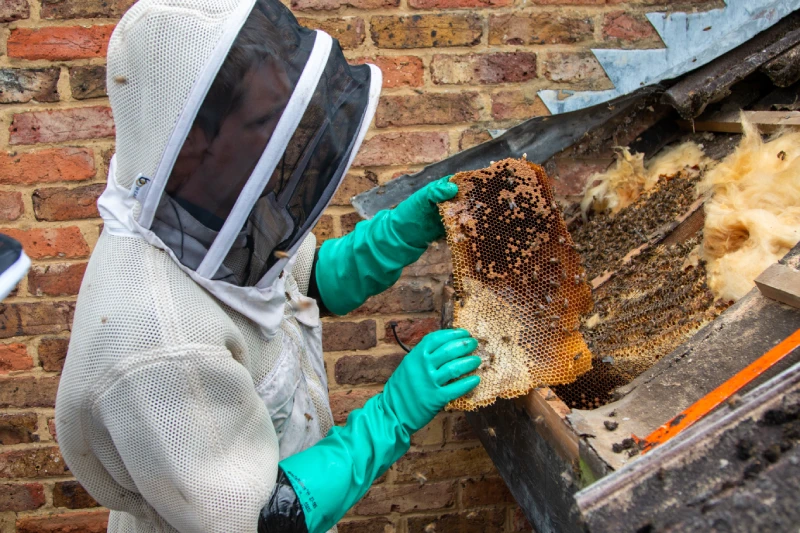
Are you aware that a single hive can contain up to 50,000 bees? That’s a lot. So, if you’ve noticed the presence of bees in or around your home, your first impulse may be to call the exterminators and remove them manually. Bee hive removal is integral to removing any pest infestation, but it’s also sensitive. If a bee colony is disturbed before it’s released, they’ll leave the area, and you will have no relief from the stinging. If you need bee removal in San Antonio, TX, leave the work to trained professionals who understand how to handle the problem safely and properly.
If you find yourself with a bee issue, don’t panic. Bees are beneficial insects that help pollinate crops and flowers. They also provide honey for human consumption, which is why many people keep them as pets. Nevertheless, if you are allergic to bees or if they become too aggressive and you feel uncomfortable around them, you may want to get rid of them as quickly as possible. Our San Antonio bee removal approach focuses on identifying the type of bee activity, locating the hive, and choosing a safe solution for your property.
Bees can sometimes become a nuisance, especially if they decide to build a hive in your home or on the exterior of your property. Our bee removal service in San Antonio is designed to help you get rid of bees and prevent them from returning. We offer a variety of services, including:
Honeybees are the most common type of bee that people encounter. They are also the smallest, making them difficult to remove without the proper tools and knowledge. Honeybees often nest in walls, ceilings, attics, and other hard-to-reach places. For bee removal in San Antonio, TX, these hidden nesting areas must be inspected carefully before treatment begins.
Bumblebees are black with yellow stripes on their abdomen and have large hind legs for carrying pollen. These bees can be aggressive during spring when looking for new nests, so it’s essential to take precautions when working around them.
Carpenter bees are black or dark brown with copper or red stripes on their abdomen, and they build their nests out of wood chips or by chewing holes in wood surfaces such as window sills or decks. They are less likely than bumblebees to sting humans, but they do cause damage by chewing holes in wood surfaces where they live. A careful San Antonio bee removal plan can help protect these areas before the damage gets worse.
Tornado Pest Control LLC is a highly trained professional team specializing in removing beehives and other pests. We’ll get rid of them and ensure they don’t come back. If you’ve had an infestation before, our bee removal service in San Antonio can help you understand what attracted the bees and how to better protect your property in the future.

Yes. Carpenter bees can drill into wood surfaces and may cause damage to decks, trim, siding, and outdoor structures.
The size, color, nesting location, and behavior can help identify them, but a professional inspection is the safest option.
Yes. Bees may return if the hive area, entry points, or attractants are not properly addressed after removal.