
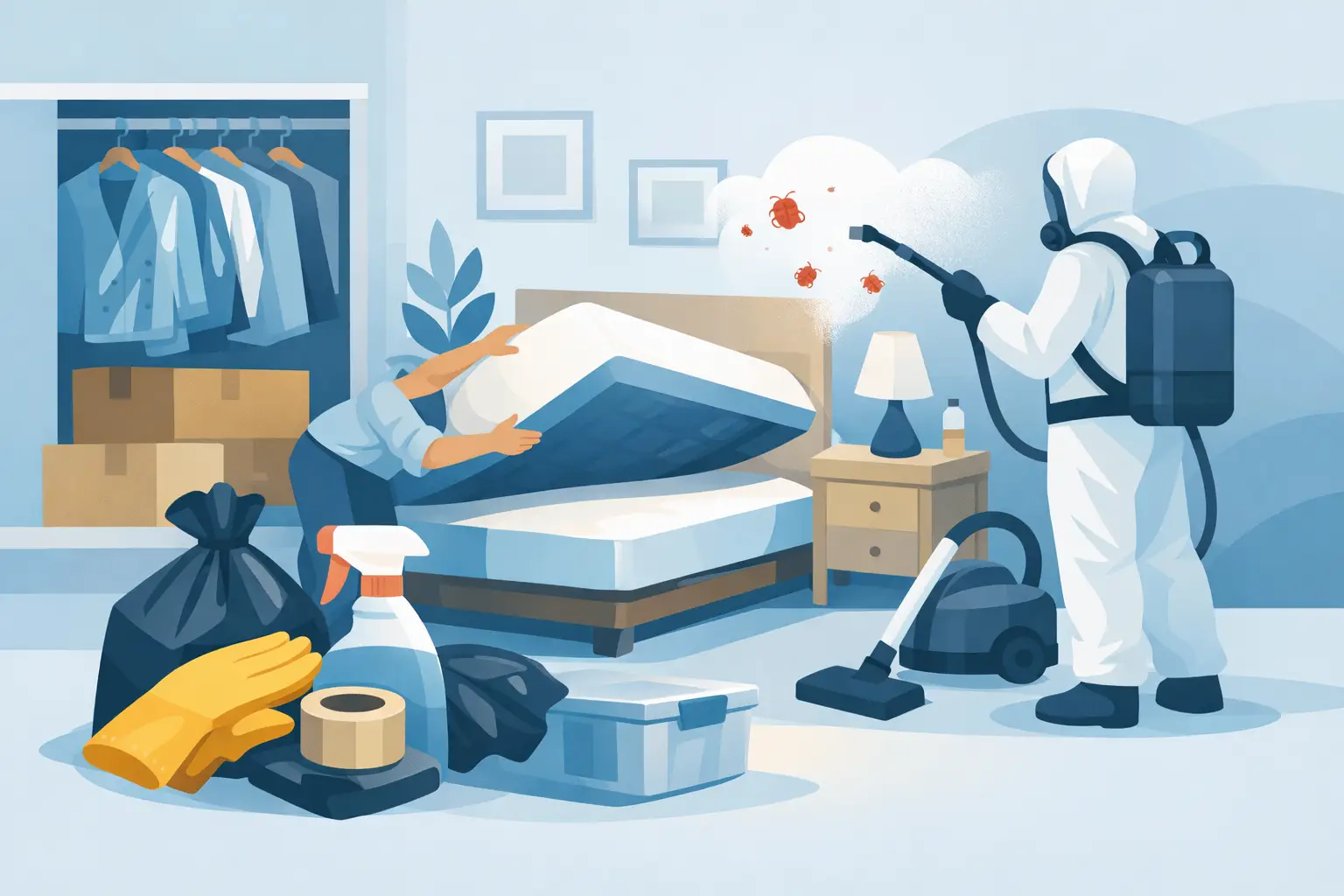
Finding bed bugs in your home can make your skin crawl fast, but good preparation makes a big difference. If you’re wondering how to prepare for bed bug extermination, the goal is simple – give the treatment the best chance to work the first time and avoid giving bed bugs new places to hide.
That preparation matters more than many homeowners realize. Bed bugs are small, stubborn, and very good at tucking themselves into seams, cracks, furniture joints, baseboards, and piles of everyday clutter. If rooms are left crowded, laundry is mixed together, or items get moved from one space to another without a plan, it becomes easier for bed bugs to spread and harder for your pest control team to treat the problem thoroughly.
Why preparation matters before treatment
Bed bug treatment is not just about spraying a room and calling it done. A professional extermination plan usually depends on direct access to the places where bed bugs live and travel. That means mattresses, bed frames, nightstands, couches, baseboards, closet edges, and nearby fabrics all need attention.
When a home is properly prepared, technicians can inspect more accurately and treat more effectively. When preparation is skipped, some hiding spots may stay blocked off, which can slow down results. This is also why prep instructions sometimes feel detailed. They are not there to make your life harder. They are there to help solve the problem completely.
How to prepare for bed bug extermination room by room
The best approach is steady and organized. Start with the rooms where bites, spotting, or live bugs have been noticed, but assume nearby rooms may also need attention. Bed bugs travel, especially in apartments, shared walls, and homes where people have moved items around trying to contain the problem.
Start with clothing, bedding, and washable fabrics
Remove sheets, pillowcases, blankets, mattress covers, comforters, curtains, and any clothing stored near sleeping areas. Place these items directly into sealed plastic bags before carrying them through the house. That helps keep bed bugs from dropping off in hallways, laundry rooms, or other bedrooms.
Wash fabrics in hot water when the material allows, then dry them on high heat for at least 30 minutes or according to the fabric’s safe care limits. Heat is a major part of killing bed bugs and their eggs. Once items are clean, place them into fresh sealed bags or clean bins until after treatment. Do not put cleaned items back onto treated beds or furniture until your exterminator says it is okay.
If something cannot be washed, a high-heat dryer cycle may still help, depending on the item. Some delicate materials need a different plan, so when in doubt, ask your pest control provider before damaging clothing or linens.
Reduce clutter without spreading the infestation
Clutter gives bed bugs more places to hide, but cleaning too aggressively can backfire if it spreads them. Do not start tossing loose items from room to room. Instead, sort carefully and bag things where they are found.
Books, shoes, toys, papers, and stored items should be picked up from floors and from under beds so technicians can access baseboards and furniture edges. Keep the process controlled. Bag items if needed, label them, and avoid carrying unsealed belongings through the home.
If you plan to throw something away, check with your exterminator first. In some cases, furniture can be treated and saved. In others, heavily infested items may need to be discarded. If something is removed, wrap it securely and mark it clearly so no one else takes it back inside by mistake.
Pull furniture away from walls
Beds, dressers, nightstands, and couches often need to be moved a few inches away from the wall. This gives the technician access to baseboards, wall edges, and the back sides of furniture where bed bugs may be hiding.
Take care not to drag bedding or loose fabric across the floor while moving things. If your provider gives exact spacing instructions, follow those closely. Every company may handle treatment a little differently based on the severity of the infestation and the methods being used.
What to do with your bed and mattress
The bed is usually the main focus because bed bugs stay close to where people sleep. Strip the bed completely and bag all linens before washing. Leave the mattress and box spring accessible for inspection and treatment.
Do not throw out your mattress unless a professional tells you it is necessary. Many homeowners do this too soon, then end up bringing the bugs to another room or replacing the bed before the infestation is fully controlled. In many cases, the mattress, box spring, and frame can be treated as part of the full service plan.
If your technician recommends mattress or box spring encasements after treatment, that can be a helpful next step. These covers are designed to trap any missed bugs inside and make future inspections easier. They are useful, but they do not replace professional treatment.
Vacuuming can help, but it is not the whole fix
Vacuuming mattress seams, bed frames, baseboards, carpet edges, and upholstered furniture can reduce visible bugs and debris before treatment. Use slow, careful passes and pay close attention to cracks and seams.
As soon as you’re done, empty the vacuum contents into a sealed bag, place that bag in an outdoor trash container, and clean the vacuum if possible. If you use a vacuum with a disposable bag, remove and discard it right away. Vacuuming helps, but it will not eliminate a bed bug infestation by itself, especially when eggs are present.
Be careful with DIY sprays and foggers
This is one of the biggest mistakes people make before a professional visit. Store-bought bug bombs and over-the-counter sprays can scatter bed bugs deeper into walls, furniture, and adjoining rooms. That makes treatment harder, not easier.
Some products can also interfere with the professional materials and treatment strategy your technician plans to use. If you have already sprayed something, be honest about it. Good pest control work depends on clear information, and your technician needs to know what has been applied in the home.
Plan for pets, kids, and time out of the house
Before treatment day, ask how long people and pets will need to stay out of the home or out of treated rooms. That timing depends on the products and methods being used. Families with small children, dogs, cats, birds, or sensitive household members should get those instructions ahead of time so there are no surprises.
This is also a good time to think about essentials. Set aside medications, wallets, phones, chargers, work items, pet supplies, and a change of clothes before rooms are bagged and prepared. You do not want to dig through sealed laundry bags later because someone left their keys in a pocket.
Follow your exterminator’s exact instructions
General advice helps, but every infestation is a little different. A single-family home in San Antonio may need a different prep plan than a duplex, apartment, or furnished rental. The number of rooms involved, the amount of clutter, the treatment type, and whether the infestation has spread all affect the instructions.
That is why the best answer to how to prepare for bed bug extermination is this: follow the company checklist exactly, and if something is unclear, ask before treatment day. A good pest control team should explain what needs to be washed, what can stay in place, what should be bagged, and how to handle furniture, electronics, and personal items without adding stress to the process.
At Tornado Pest Control and Pressure Washing Solutions LLC, that kind of clear communication matters because homeowners should know what is happening in their own home and why.
What happens after the first treatment
Preparation does not end the moment the technician leaves. You may be asked to keep cleaned laundry sealed for a period of time, avoid moving items between rooms, limit vacuuming in certain treated areas for a short window, or watch for signs of continued activity.
It is also common for bed bug control to require follow-up service. That does not always mean the first treatment failed. Bed bugs are hard to eliminate because eggs may hatch later, and some infestations are heavier than they first appear. What matters is staying consistent with post-treatment instructions and reporting what you are seeing.
If bites continue for a short time, that does not always mean live bed bugs are still feeding. Skin reactions can lag behind actual exposure. On the other hand, if you keep seeing live bugs, fresh spotting, or new activity in other rooms, tell your pest control provider right away so they can adjust the plan if needed.
A few common mistakes to avoid
People often panic and sleep in another room, throw out furniture too soon, stop following instructions after the first service, or keep pulling clean items back out of sealed bags. Those choices are understandable, but they can slow the process down.
Try to stay patient and consistent. Bed bug work is most successful when the homeowner and the pest control team work together with a clear plan. A little extra prep up front can save a lot of frustration later.
If your home is being treated, do not focus on making things look perfect. Focus on making the treatment effective. Clean access, sealed laundry, reduced clutter, and clear communication go a lot further than panic cleaning ever will.
The good news is that bed bugs can be dealt with, and you do not have to figure it all out alone. When you prepare carefully and follow the right steps, you give the treatment a much better chance to do what it is supposed to do – help you get your home back.

