
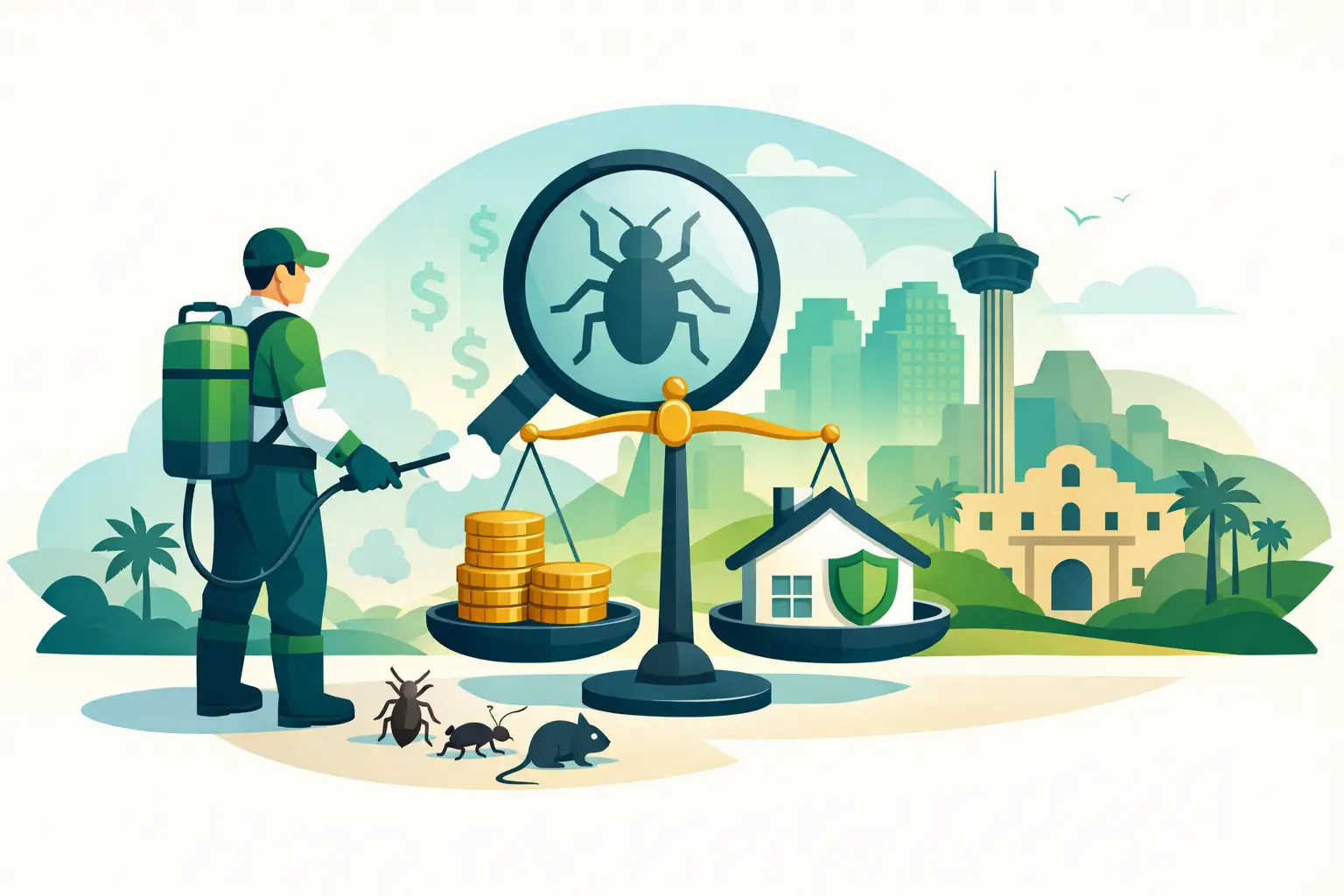
If you’ve spotted roaches in the kitchen, ants along the baseboards, or wasps setting up shop near the porch, your first question is usually pretty simple: how much is pest control in San Antonio? The honest answer is that pricing can vary quite a bit, because the cost depends on the pest, the size of the property, how serious the problem is, and whether you need a one-time treatment or ongoing protection.
For most homeowners in San Antonio, general pest control usually falls somewhere between about $100 and $300 for a standard visit, while recurring service plans may run roughly $40 to $80 per month depending on coverage. More specialized work, like termite treatment, bed bug extermination, or bee removal, can cost more because it takes different materials, more labor, and a more targeted treatment plan.
How much is pest control in San Antonio for common services?
The easiest way to think about pest control pricing is by service type. A basic preventative treatment for common household pests is usually the most affordable option. This often covers pests like ants, spiders, roaches, silverfish, and other crawling insects that show up in and around the home.
If the issue is caught early, a one-time service may be enough to get things under control. But if pests keep coming back, recurring treatment is often the better value. Ongoing service helps stop problems before they turn into full infestations, which can save money and stress over time.
For tougher issues, pricing climbs. Roach infestations can take more than one visit, especially if they have spread into walls, kitchens, bathrooms, or garages. Bed bug treatments are usually among the most expensive because they require detailed inspection, careful treatment, and follow-up. Termite work is also a different category because you are not just dealing with nuisance pests – you are protecting the structure of the home.
Bee and wasp removal pricing depends a lot on access and risk. A visible nest under an eave is very different from a colony inside a wall or roofline. In those cases, what looks like a quick job from the ground may actually require extra time and safety precautions.
What affects pest control pricing?
Two homes in the same San Antonio neighborhood can get very different quotes, and that does not always mean one company is overcharging. Pest control is not a flat-fee service in every situation. Several factors shape the final price.
The type of pest
Some pests are easier to treat than others. Ants and general exterior insects are usually more straightforward than termites, fleas, bed bugs, or German cockroaches. The more persistent or hidden the pest, the more involved the service tends to be.
The size of the home or property
A smaller single-story home typically takes less product and less time than a large property with a detached garage, heavy landscaping, and multiple entry points. If pests are active both inside and outside, the service scope can grow quickly.
The severity of the infestation
There is a big difference between seeing one wasp nest and finding multiple active nests around the property. The same goes for roaches, termites, and bed bugs. A light issue caught early may be handled faster, while a long-running infestation often needs a more aggressive plan.
Interior treatment, exterior treatment, or both
Some homeowners only want the perimeter treated. Others need indoor treatment, attic work, yard treatment, or spot treatment in problem areas. The more areas involved, the more labor and materials are required.
Frequency of service
One-time treatments often cost more upfront per visit than recurring plans. Monthly, bi-monthly, or quarterly service spreads the cost out and helps prevent repeat infestations. For many homes in South Texas, that kind of routine service makes sense because pests are active for much of the year.
Why San Antonio pest control can be worth the money
San Antonio weather is good for a lot of things, but it is also good for pests. Warm temperatures, mild winters, and seasonal rain create the kind of environment where insects and rodents stay active longer. That means pest control here is not always a once-and-done situation.
Roaches, ants, mosquitoes, termites, scorpions, spiders, fleas, and wasps are common concerns across the area. Homes with yards, mature trees, nearby greenbelts, pet traffic, or irrigation can be especially attractive to pests. If you wait until the problem is obvious, the treatment usually gets more expensive.
That is why many property owners look at pest control as part of regular home care, not just an emergency expense. In the same way you maintain your lawn, trim trees, or wash the exterior, pest prevention helps protect the property before damage or infestations get worse.
One-time treatment vs. recurring service
If you are comparing quotes, this is one of the biggest pricing differences you will notice.
A one-time service can be a good fit when you have a specific issue, such as ants in the pantry, a wasp nest near the front door, or a sudden spike in spiders around the house. It addresses the immediate problem, and for some homeowners that is enough.
Recurring service is usually the better long-term play if your property deals with repeat pest activity. Instead of paying for emergency visits whenever something pops up, you have a regular schedule that helps keep pests from settling in. That often means fewer surprises, less stress, and better year-round results.
There is a trade-off, though. Recurring service is a commitment, even if the monthly cost is easier to budget. One-time service gives you flexibility, but it may not solve the root issue if pest pressure around the home stays high.
What a quote should include
When asking how much pest control is in San Antonio, it helps to look beyond the number itself. A low price is not always a better deal if the service is limited or the company is vague about what is covered.
A solid quote should explain what pests are being treated, whether the service includes interior and exterior areas, how many visits are included if needed, and whether follow-up is part of the plan. It should also be clear about any preparation required from the homeowner.
This is where honest communication matters. A trustworthy company will tell you if a problem needs more than a basic spray. They should also explain if ongoing prevention would be smarter than paying for repeat one-time visits.
Questions worth asking before you book
You do not need to be an expert, but you should feel comfortable asking practical questions. Ask whether the technicians are licensed and insured, what kind of treatment approach they use, how long the service usually takes, and what happens if pests return after treatment.
If the issue involves children, pets, or sensitive areas around the home, ask how those spaces will be handled. Good service is not just about killing pests. It is about treating the problem carefully and clearly so you know what to expect.
Average price ranges by problem
While every property is different, homeowners in San Antonio can generally expect a few broad pricing patterns. General pest control is often the lowest-cost category, especially for preventative exterior service. Roach-heavy or flea-heavy homes may fall on the higher end because they usually require more attention.
Termite inspections may be free in some cases, but treatment itself can range much higher depending on the method and the extent of activity. Bed bug work is often one of the more expensive services because success depends on thorough treatment and follow-up. Bee removal can be moderate or expensive depending on where the hive is located and how complicated access is.
That is why custom quotes matter. Pest control is one of those services where the right answer is usually not the cheapest option – it is the one that actually solves the issue and protects your home going forward.
How to keep costs from climbing
The best way to save money on pest control is to act early. A few ants, a small nest, or signs of insect activity around the foundation are easier to handle than a full infestation inside the walls or attic.
It also helps to stay on top of the things that attract pests in the first place. Overgrown landscaping, standing water, cluttered garages, tree branches touching the roof, and unsealed gaps around doors or plumbing can all make a pest problem worse. Property care and pest prevention go hand in hand.
That is one reason many local homeowners appreciate a company that sees the bigger picture. A provider like Tornado Pest Control and Pressure Washing Solutions LLC can look at the full property, not just the bug in front of you, and help you understand what might be inviting pests onto the home in the first place.
If you are trying to budget for service, the best next step is usually a clear inspection and a free quote. That gives you a real number based on your home, your pest issue, and the level of protection you actually need. Good pest control should feel straightforward, not full of guesswork, and the right plan can save you money long before the next pest problem shows up.

